
A metal spectrometer helps you understand exactly what a metal contains — within seconds. No confusion, no delays, and no costly mistakes.
In this article, we’ll explain everything in a simple, human-friendly way — what a metal spectrometer is, how it works, where it’s used, and how you can choose the right one.
What is a Metal Spectrometer?
Let’s keep it very simple.
A metal spectrometer is a machine that tells you the chemical composition of a metal. In other words, it shows what elements are inside the metal and in what percentage.
For example, if you test a metal piece, the spectrometer can tell you:
How much carbon it contains
Whether it has chromium or nickel
The presence of copper, aluminum, or other elements
It works using a scientific method called spectroscopy, where energy is applied to the metal, and the emitted light is analyzed.
Each element produces a unique signal, and the machine reads it like a fingerprint.
Why is a Metal Spectrometer Important?
Let’s talk in real-life terms.
Imagine you are running a factory and accidentally use the wrong material. The result could be:
Weak product quality
Machine failure
Customer complaints
Financial loss
A metal spectrometer helps you avoid all of that.
Key Benefits
1. Accuracy You Can Trust
No guessing — only exact results.
2. Fast Results
Most spectrometers give results within seconds.
3. Better Quality Control
You can ensure every material meets your standards.
4. Saves Time and Money
Avoid costly mistakes and rework.
5. Confidence in Decision Making
You know exactly what material you are working with.
How Does a Metal Spectrometer Work?
You don’t need to be a scientist to understand this.
Here’s a simple breakdown:
Step 1: Sample Placement
You place the metal sample in the spectrometer.
Step 2: Energy Application
The machine uses spark, X-ray, or plasma to excite the metal.
Step 3: Light Emission
The metal emits light based on its elements.
Step 4: Analysis
The spectrometer reads the light and identifies elements.
Step 5: Result Display
You get a clear report showing the composition.
All this happens in just a few seconds.
Types of Metal Spectrometers
Different jobs require different tools. Let’s understand the main types.
1. Optical Emission Spectrometer (OES)
This is one of the most widely used types.
Why it’s popular:
Very accurate
Detects carbon (important for steel)
Ideal for factories
Best for:
Manufacturing
Steel plants
Quality control labs
2. XRF Spectrometer
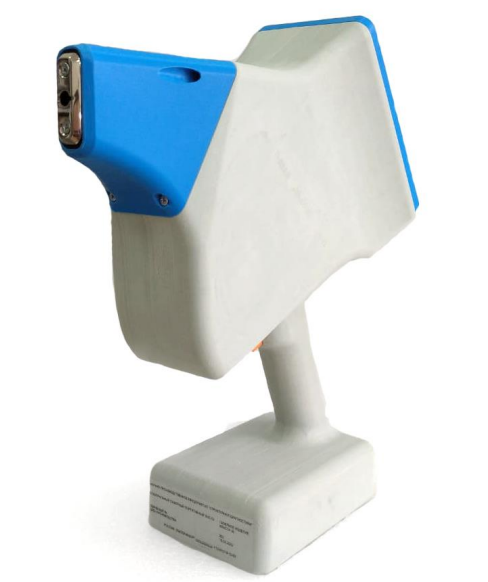
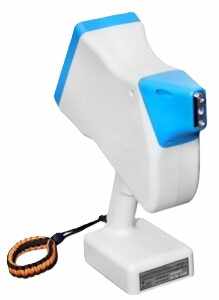
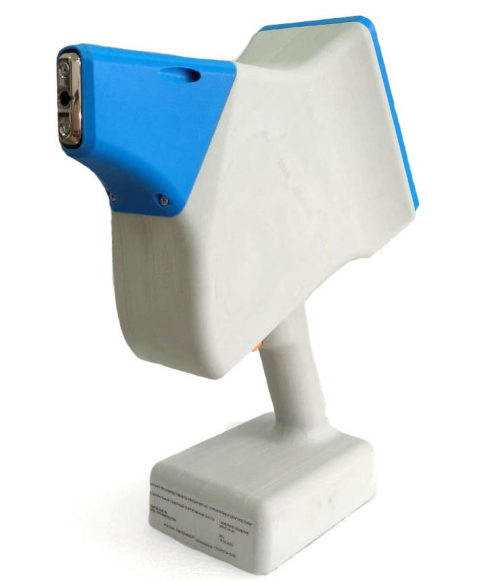
This is a portable and easy-to-use option.
Why people like it:
Lightweight
Non-destructive
Quick results
Limitation:
Cannot detect carbon properly
Best for
Scrap metal
Field inspection
Metal sorting
3. ICP Spectrometer
This is a high-end laboratory instrument.
Why it’s used
Extremely precise
Detects trace elements
Best for:
Research labs
Chemical analysis
Where is a Metal Spectrometer Used?
Metal spectrometers are used in many industries.
Manufacturing Industry
To ensure raw materials meet quality standards before production.
Scrap Industry
To identify and sort different types of metals quickly.
Automotive Industry
To check the quality of metal parts used in vehicles.
Aerospace Industry
To ensure high safety standards for aircraft components.
Construction Industry
To verify the strength and composition of structural materials.
How to Choose the Right Metal Spectrometer
Buying a metal spectrometer is an investment, so choosing the right one is important.
Let’s make it simple.
1. Understand Your Needs
Ask yourself:
What metals do I test?
Do I need carbon detection?
Do I need portability?
👉 Example: Scrap business → XRF Steel industry → OES
2. Check Accuracy
Accuracy is everything.
A small mistake in reading can cause big problems. Always choose a reliable and tested machine.
3. Look at Ease of Use
Choose a spectrometer that is easy to operate.
Look for:
Touchscreen
Simple interface
Pre-loaded metal database
4. Consider Portability
Do you need to move around?
Yes → Portable spectrometer
No → Benchtop/lab model
5. Check After-Sales Support
This is very important.
Make sure:
Service is available in your area
Spare parts are accessible
Training is provided
6. Budget Planning
Metal spectrometers come in different price ranges.
Approximate cost:
Portable XRF: ₹15–40 lakh
OES: ₹30–100 lakh
ICP: ₹60 lakh+
Don’t just look at price — consider long-term value.
Common Mistakes to Avoid
Here are some common mistakes people make:
Choosing the cheapest option Ignoring service support Not checking element detection Buying without testing Choosing the wrong type
Always ask for a demo before purchase.
Future of Metal Spectrometers
Technology is improving quickly.
In the future, we will see:
AI-based metal identification
Cloud-based reports
Faster and smarter machines
Smaller and more portable devices
This means metal testing will become even easier and more efficient.
Final Thoughts
A Metal Spectrometer is not just a machine — it’s a tool that gives you confidence.
It helps you:
Make better decisions
Maintain quality
Avoid costly mistakes
Improve efficiency



Write a comment ...